EPDM Flooring
Seamless wet-pour rubber surfacing for school playgrounds, early-years courtyards and outdoor activity areas across the GCC. Plan the colours, markings and floor build-up around how students use the space.
Where EPDM works
School playgrounds
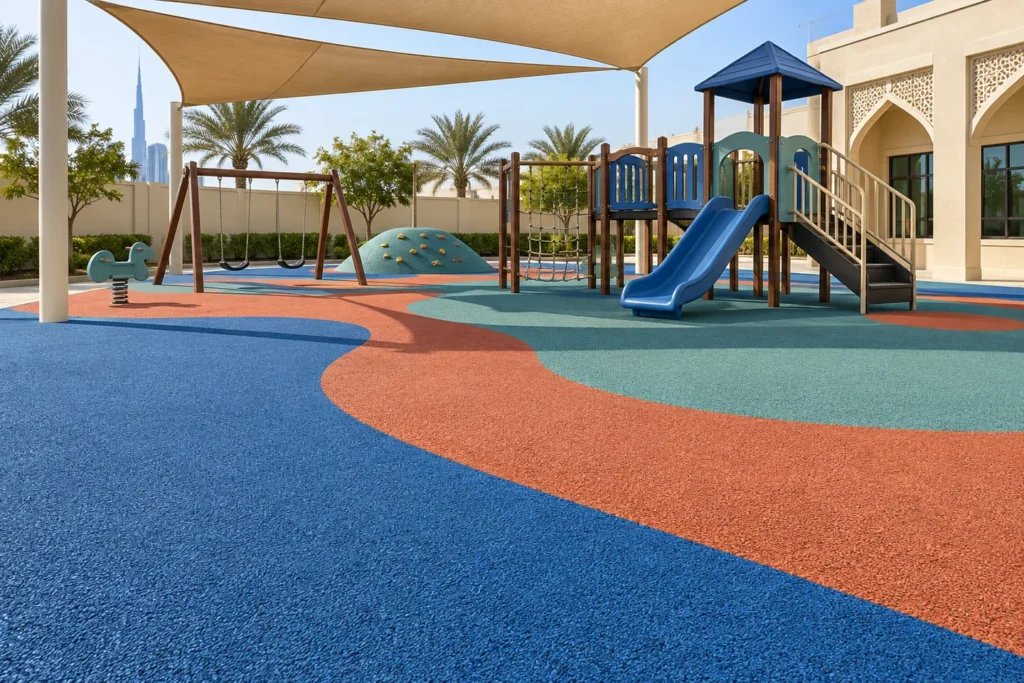
Use continuous surfacing around play equipment and specify a tested build-up for the required fall height.
Early-years courtyards
Use colour and shape to distinguish quieter spaces from active play zones.
Outdoor activity routes
Use built-in markings to define movement routes and informal games.
Colour and markings built into the floor
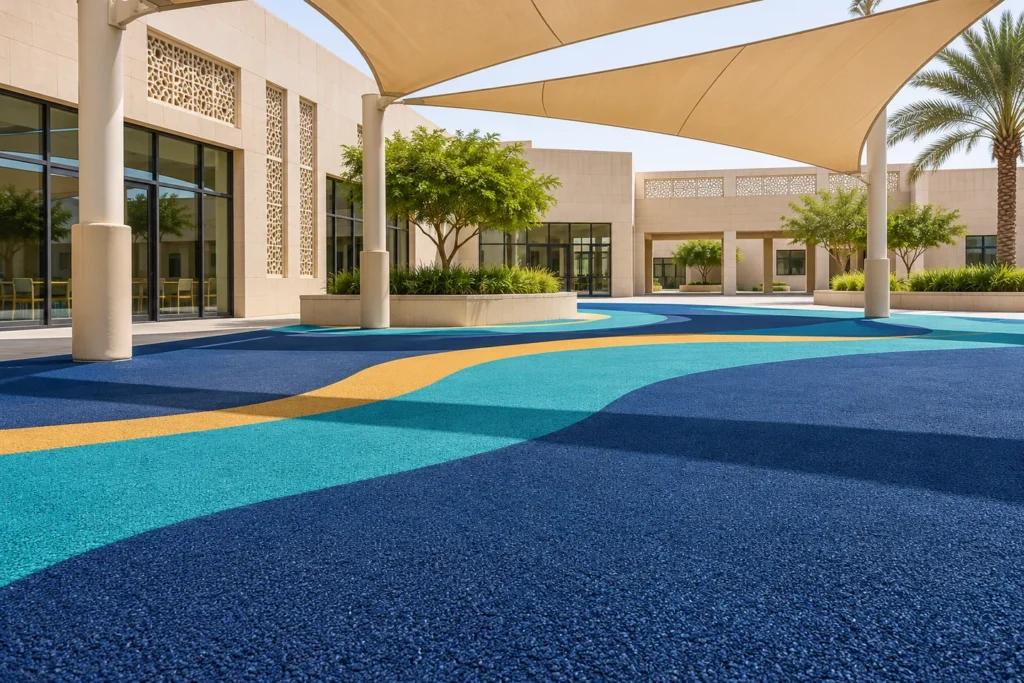
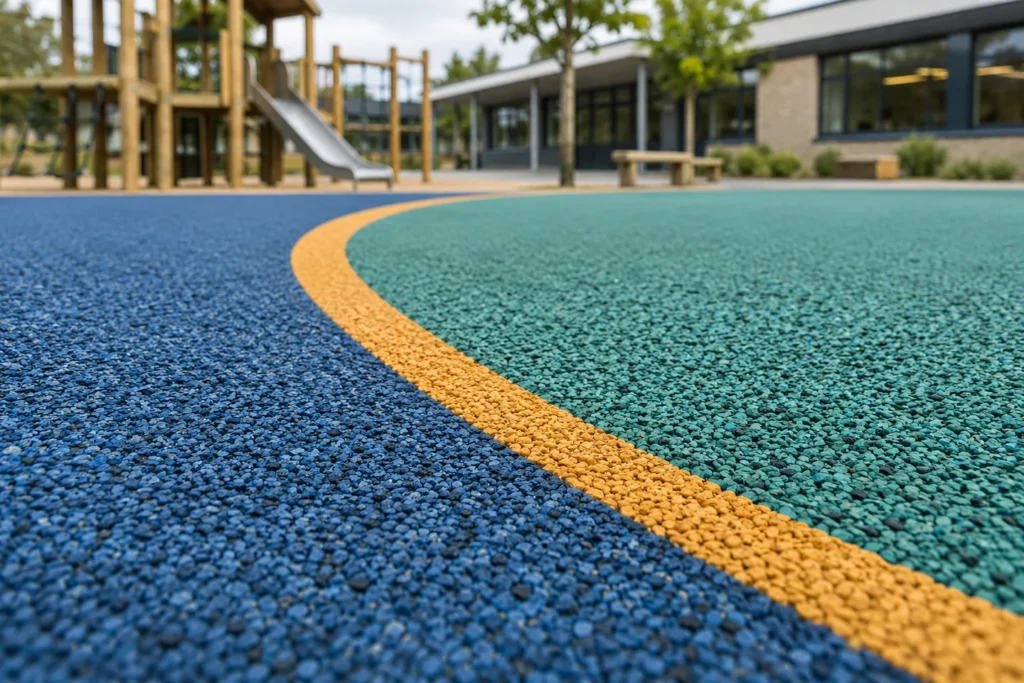
Use a coordinated palette for play zones, pathways and school colours. Contrasting shapes can help pupils identify activity areas, while simple line markings support informal games and movement.
What goes beneath the colour
EPDM wearing layer
Coloured EPDM granules are mixed with a binder and laid on site to create a continuous finish.
Resilient base
A compatible rubber base provides cushioning. Its specification depends on the selected system, site conditions and fall-height requirements.
Before specifying your floor
Survey the site
Check the sub-base, slopes, drainage and perimeter details.
Set performance needs
Identify equipment fall heights and request test evidence for the proposed system.
Plan upkeep
Clear debris and inspect edges and high-traffic areas regularly.
See how the surface shapes the space
Curved markings and contrasting colours bring structure to a shared outdoor courtyard.
Plan the work around your school day
Can EPDM go over an existing surface?
Can we match school colours or add games?
How is playground thickness specified?
Plan your EPDM flooring project
Share your site dimensions, equipment layout and preferred colours so the team can discuss a suitable build-up.